FDC Hyve
Role
User Research, Product Design, Website Design, Admin Dashboard
Industry
Community
Timeline
September-November 2025
Product overview
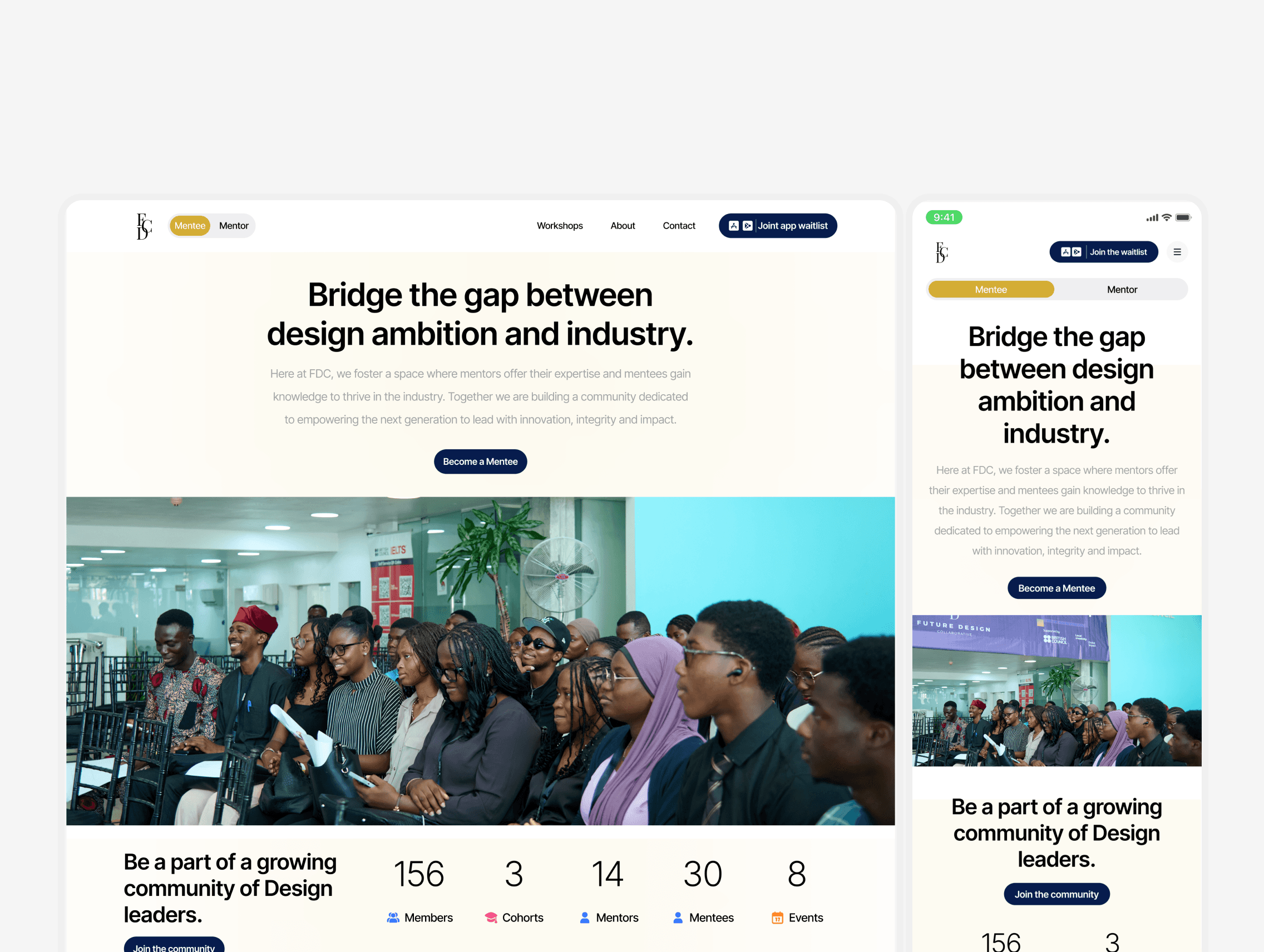
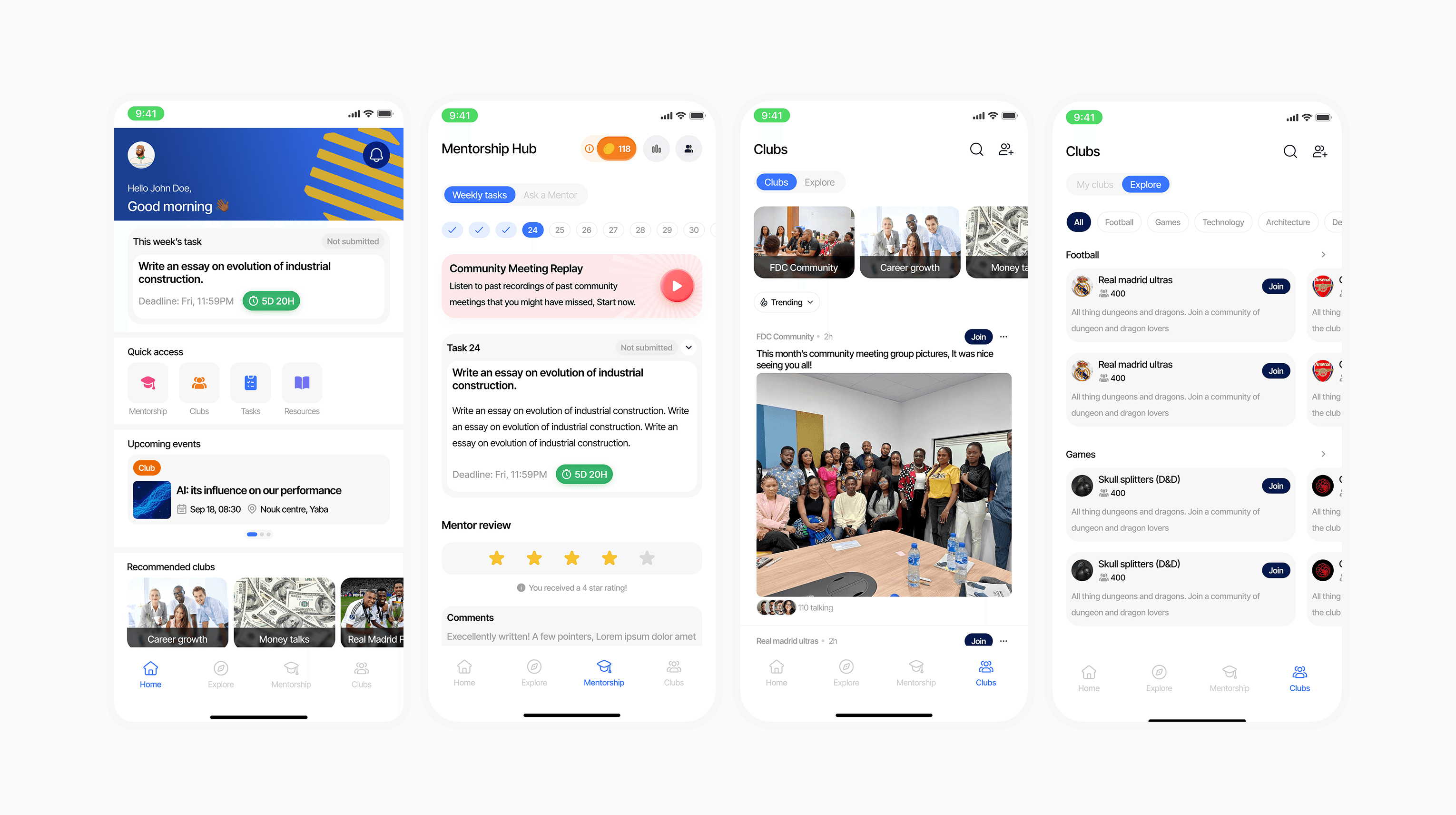
Hyve is a mentorship and community platform built for architects and designers. The goal was simple. Help young creatives learn from experienced professionals, grow their skills, and stay accountable through structured weekly reviews, Q&A threads, and club-based communities. Future Design Collaborative (FDC) wanted a digital space that reflects how designers learn in the real world. My role spanned research, UX strategy, mobile design, admin tools, and the public waitlist site.
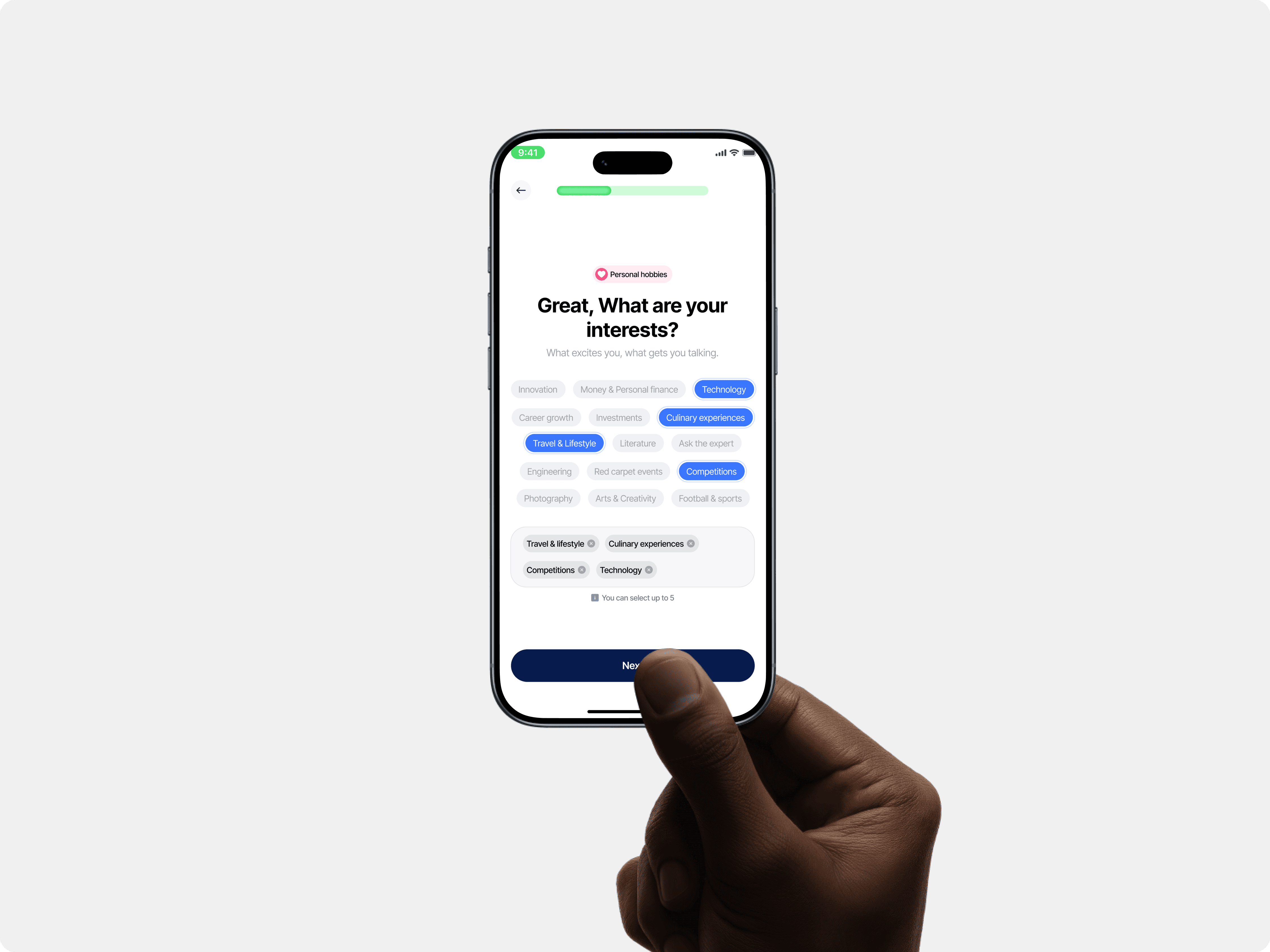
Onboarding screen
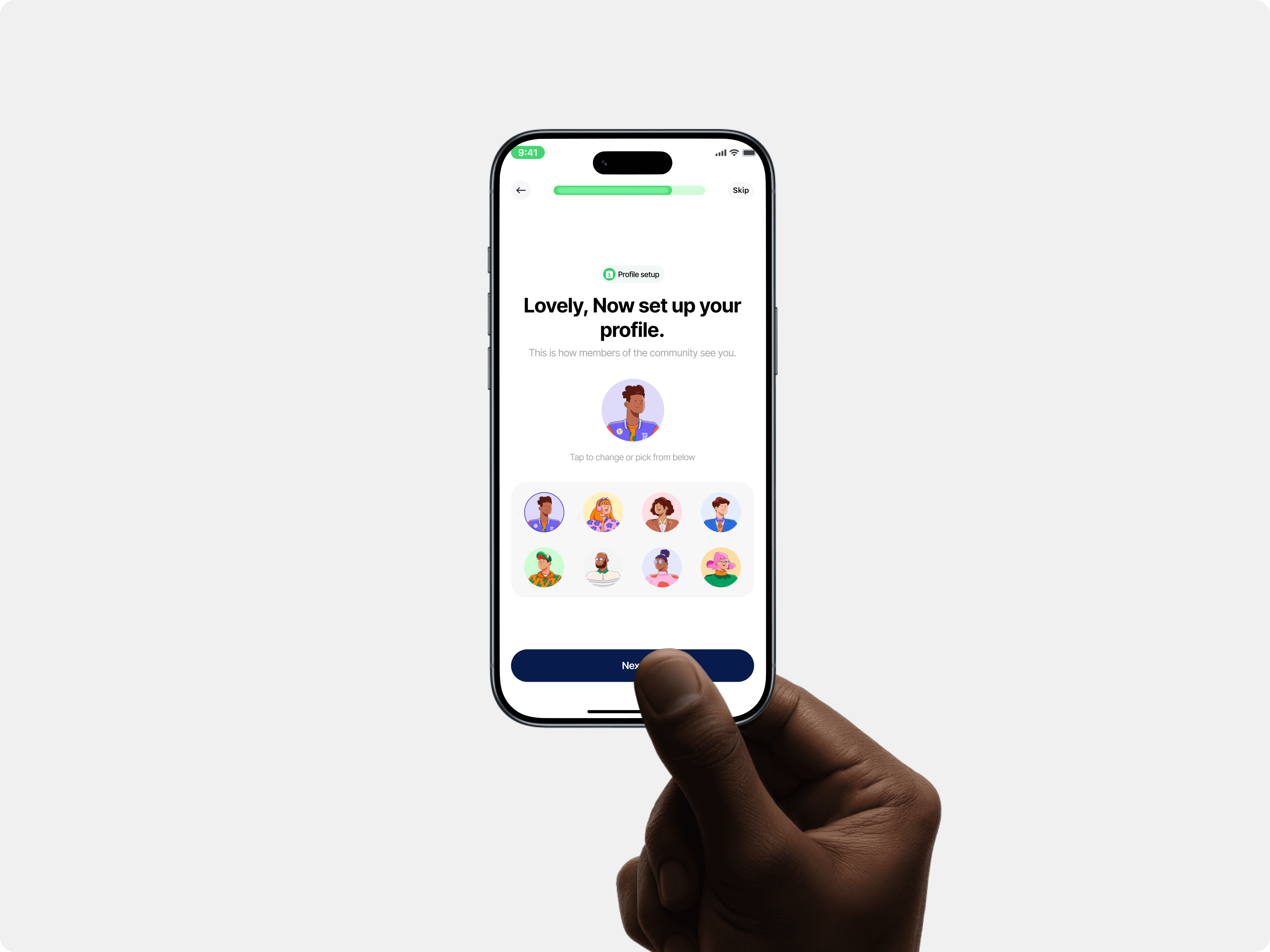
Onboarding screen
My Role
To bring the vision of FDC Hyve to life, I joined the team to collaborate closely with stakeholders and drive the product’s evolution from discovery to testing. Stepping in as the lead designer, I took ownership of transforming the initial MVP—prioritizing features, setting internal deadlines, and ensuring seamless communication across the team.
At FDC, I worked as the lead designer, ensuring design consistency and alignment with the brand and marketing strategist. More importantly, I took on roles as a user researcher and product designer, shaping the product experience through research-driven decisions.
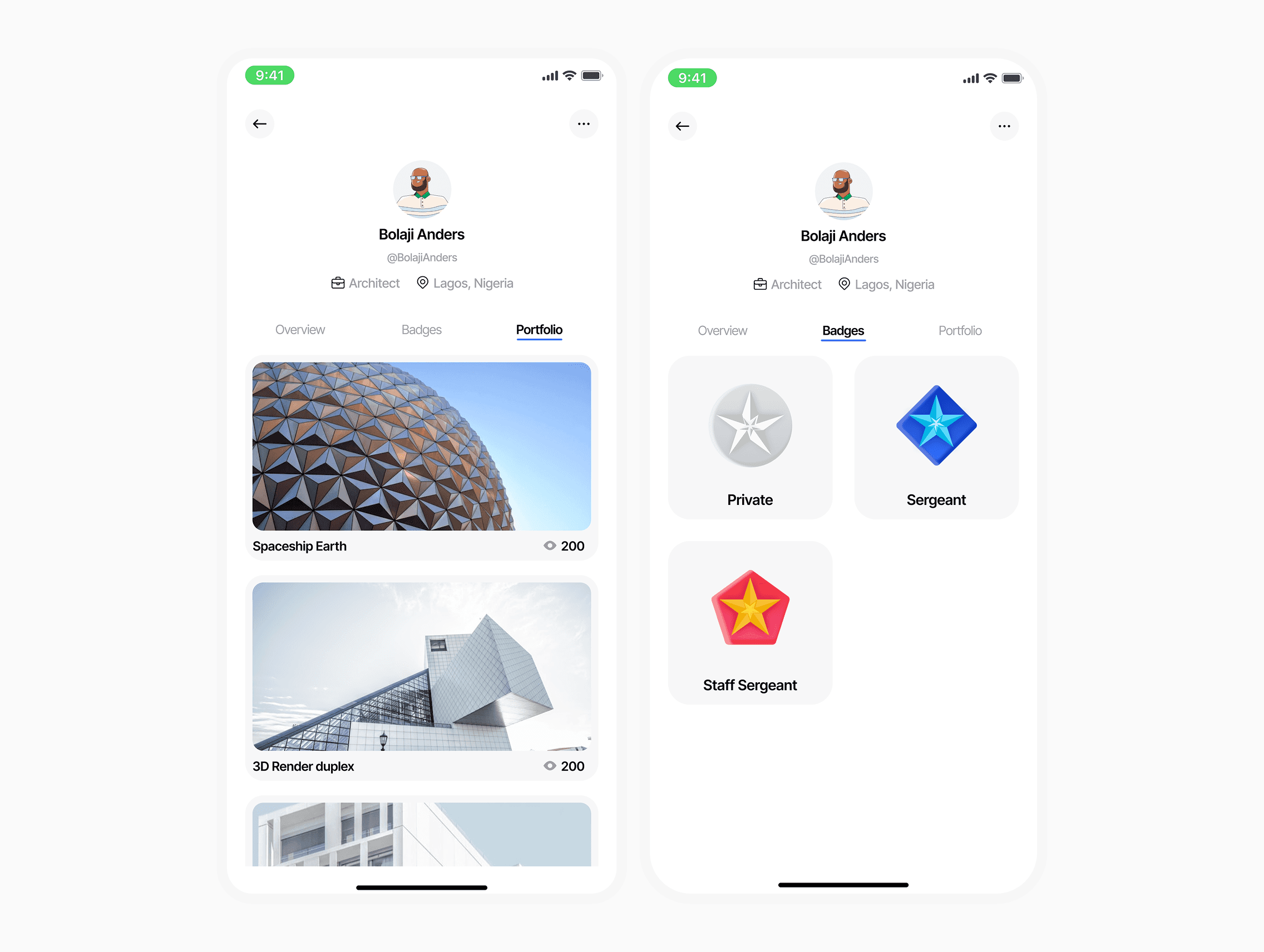
Portfolio showcase
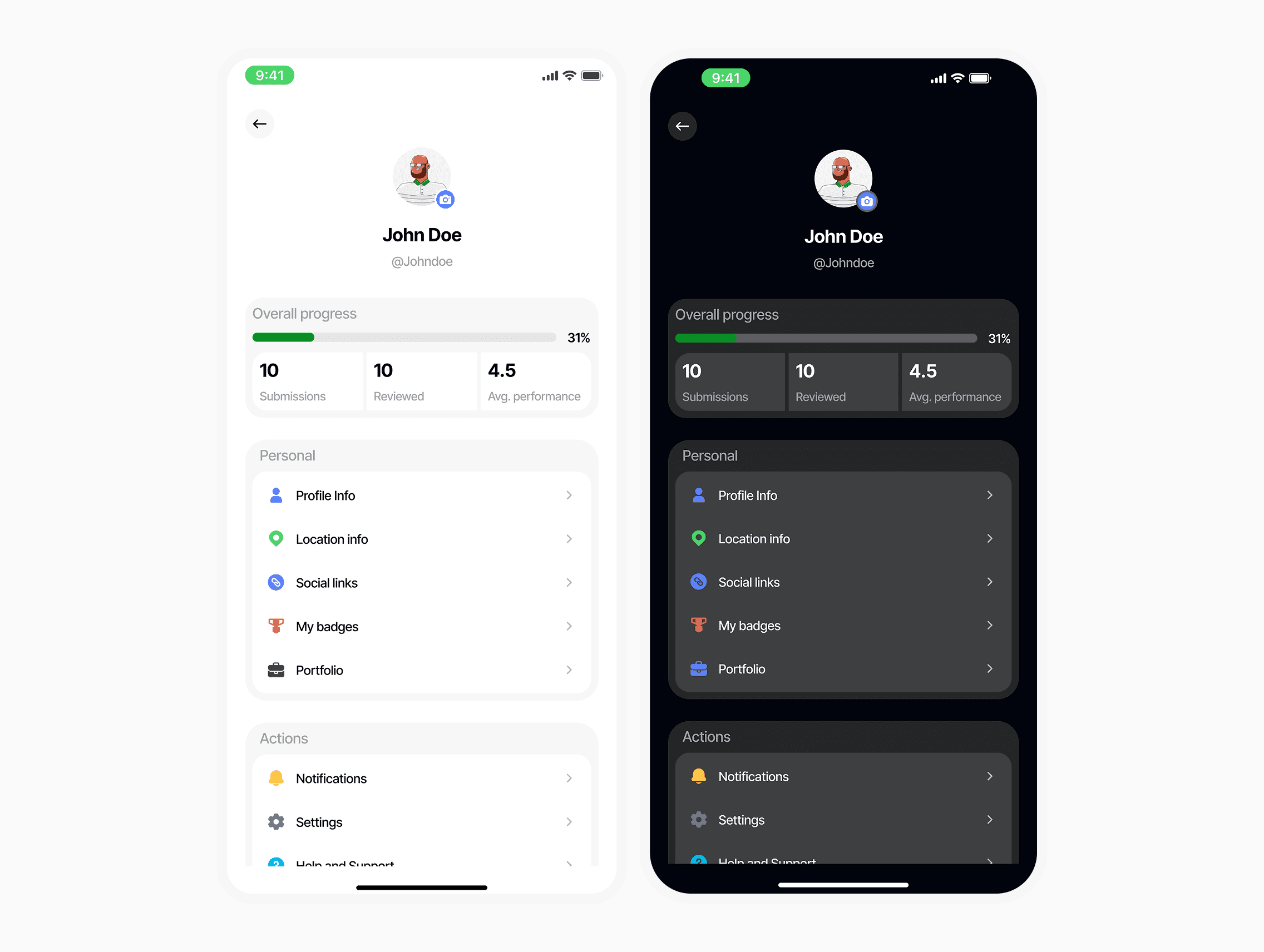
User profile page
Challenges faced
Some of the challenges encountered while working on this project include:
1. Low engagement patterns among early-career designers
Young architects tend to join communities but drop off after a few days. In research sessions, 7 out of 10 participants said they “lose steam quickly” when platforms feel passive. The challenge was building a system that encourages weekly return, not occasional visits.
2. Mentor bandwidth constraints
Senior architects giving feedback have limited time. The early prototype created long queues. I needed a structure that protects mentor time but still gives learners valuable guidance.
3. Fragmented learning behavior
Portfolio work, Q&A, peer learning, and live sessions were happening across separate tools. Users jumped between WhatsApp, Instagram, Google Drive, and Zoom. This caused friction and reduced the feeling of a unified learning journey.
4. Showcasing portfolios without overwhelming users
Every architecture student wants to show their work, but a feed full of heavy images slows the app and distracts from learning objectives.
Product Solution
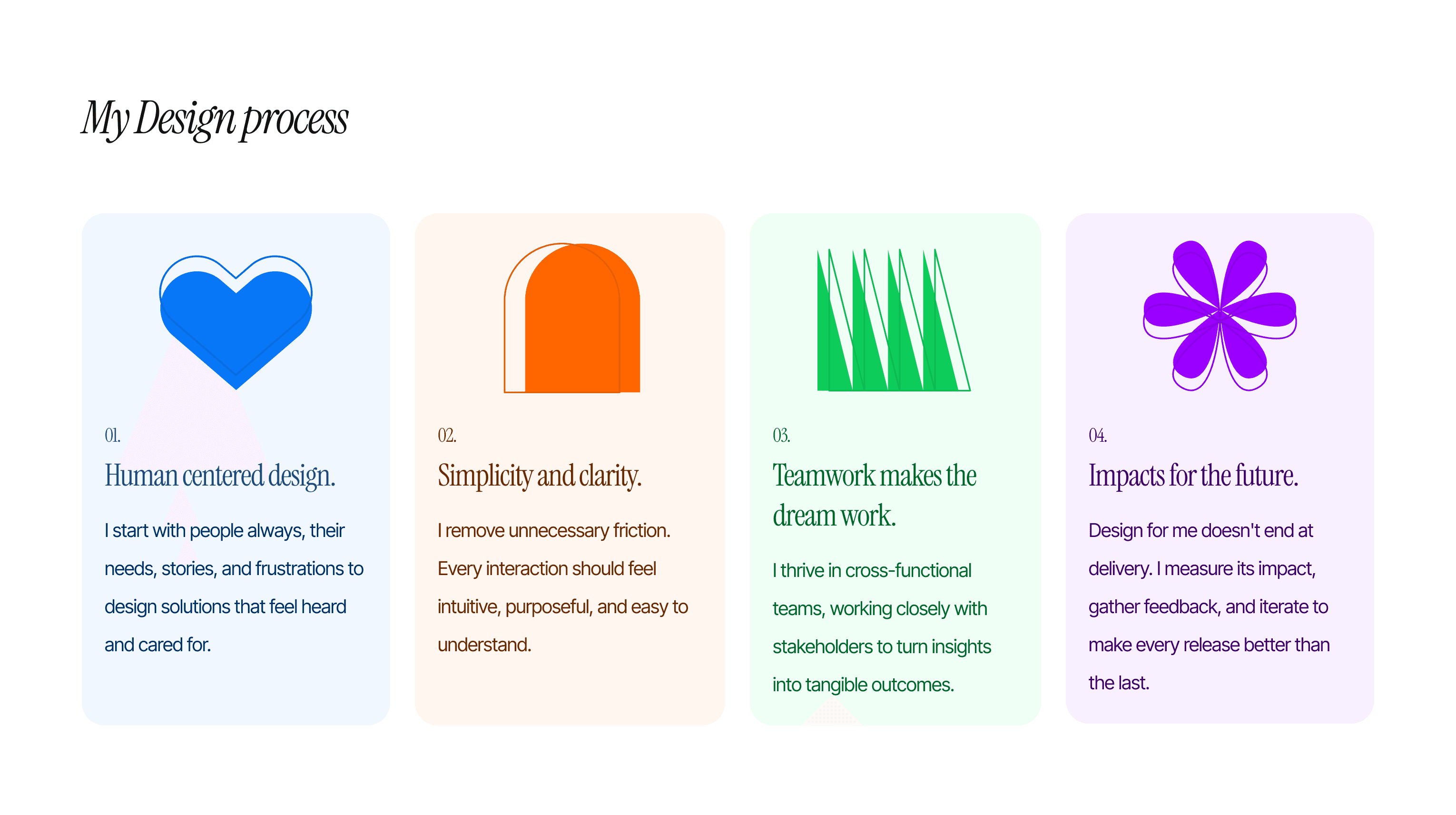
Creating the MVP into the very first version from scratch wasn't easy but I was able to come up with a transformative solution that goes beyond traditional approach and tackled the complexity of the task with intuitiveness and simplicity.
The design solution aim to redefine the modern community experience offering an holistic solution that combats the product challenges. Some of them below:
1. Weekly Learning Loops
To solve low engagement, I designed a simple system:
A weekly goal
A review checkpoint
A short mentor–learner feedback cycle
Learners now see progress as a small journey. This increased their return rate during prototype testing. Test users opened the app 2.3 times per week on average compared to the previous 0.9 in the initial concept.
2. Structured Mentor Review Workflows
I designed mentor review cards with pre-set feedback categories like “Draft Review,” “Technical Guidance,” and “Final Critique.” This trimmed mentor time by 32 percent during the beta because they no longer had to type long messages for routine feedback.
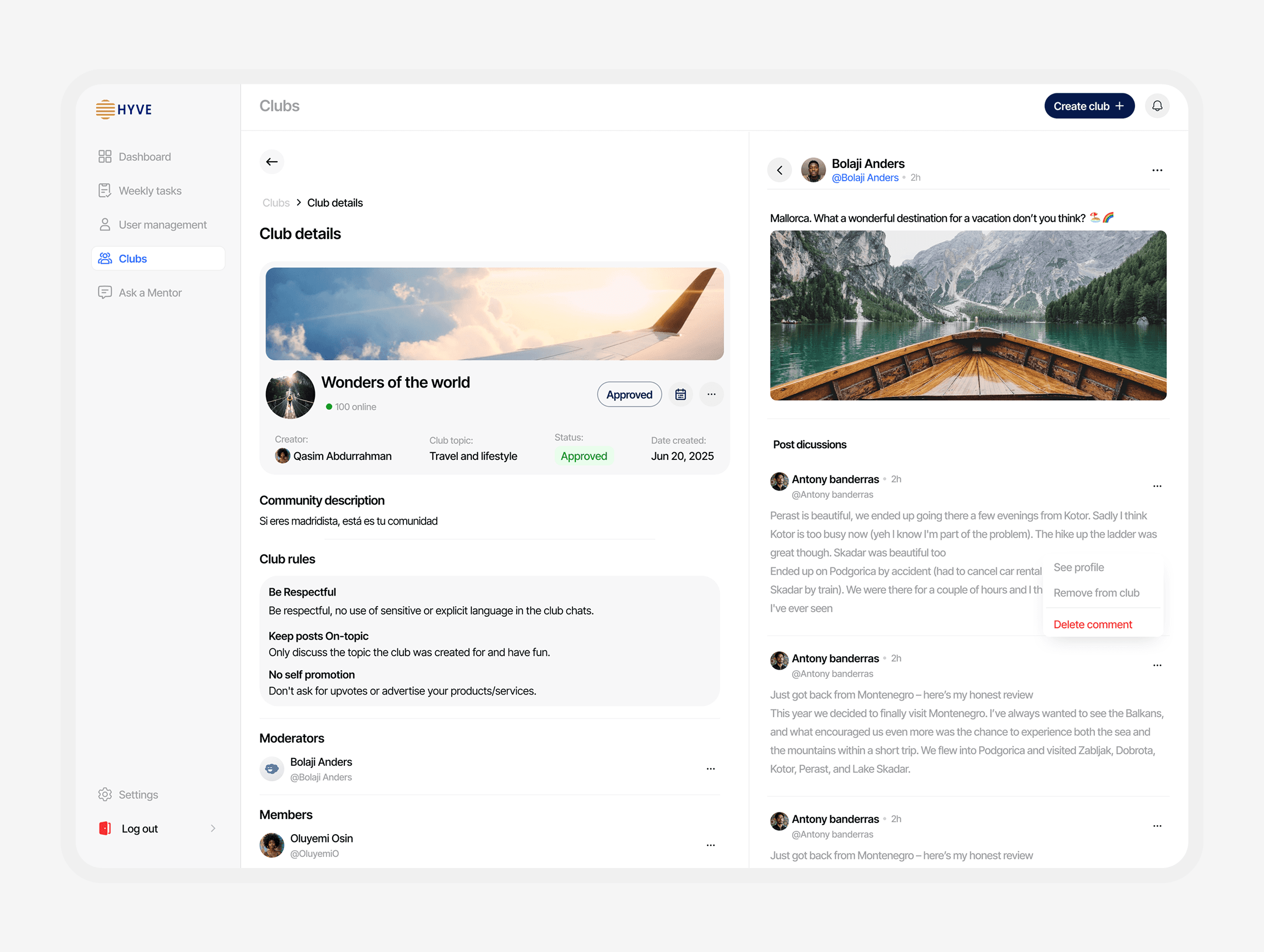
3. Clubs as Micro-Communities
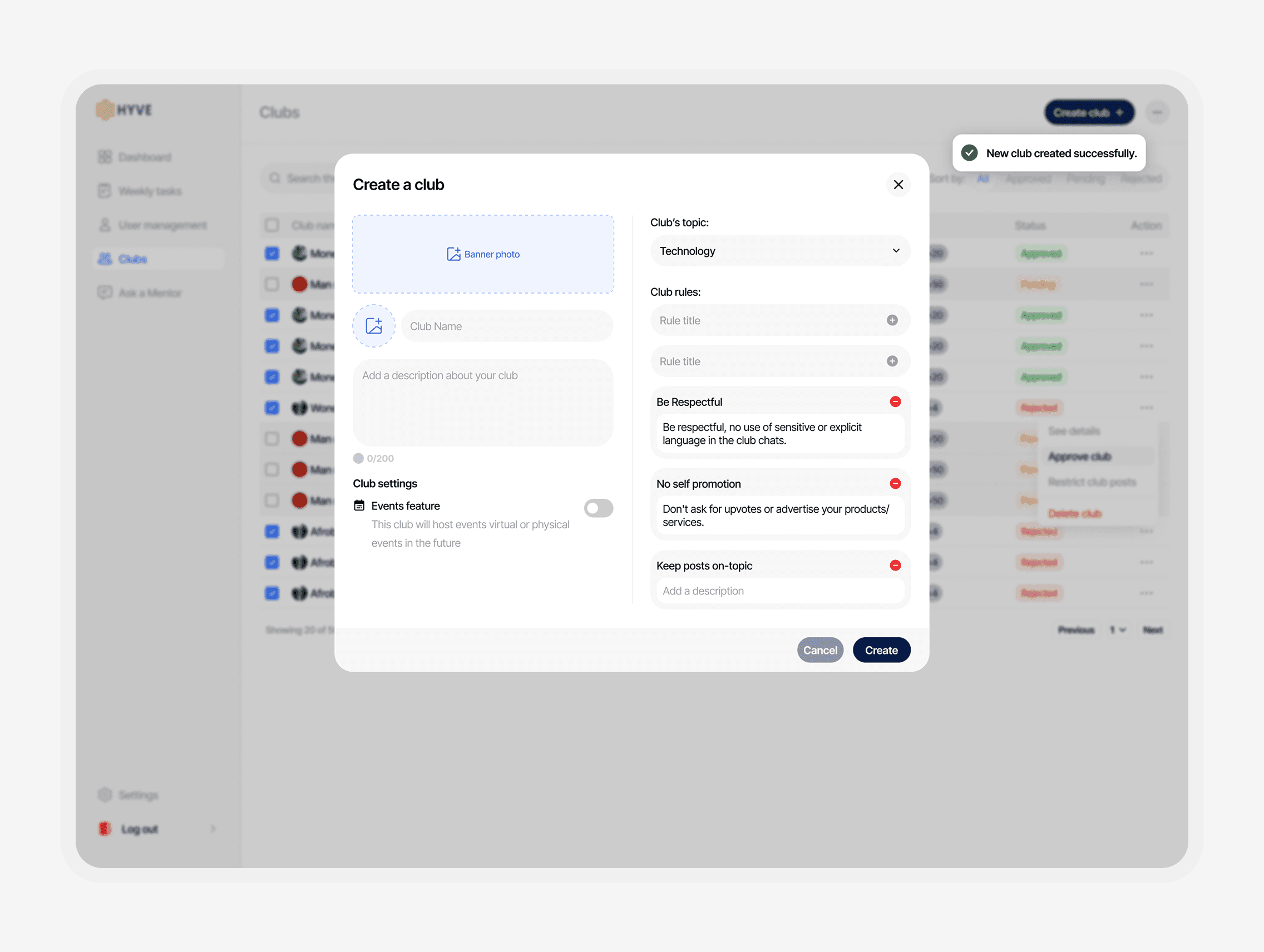
I created discussion forums called “Clubs.” They follow the logic of architectural studios.
Examples:
Parametric Design Club
Thesis Studio Club
Portfolio Review Club
Each club has threads, challenges, and tagged resources. This replaced the scattered tool experience and gave users a mental model they already know from design school.
4. Lightweight Portfolio Showcases
I introduced a “Card-first” portfolio display. Users upload a few hero images and one caption. This avoids image-heavy feeds. In performance tests, scroll performance improved by 41 percent. It also made portfolios feel curated instead of cluttered.
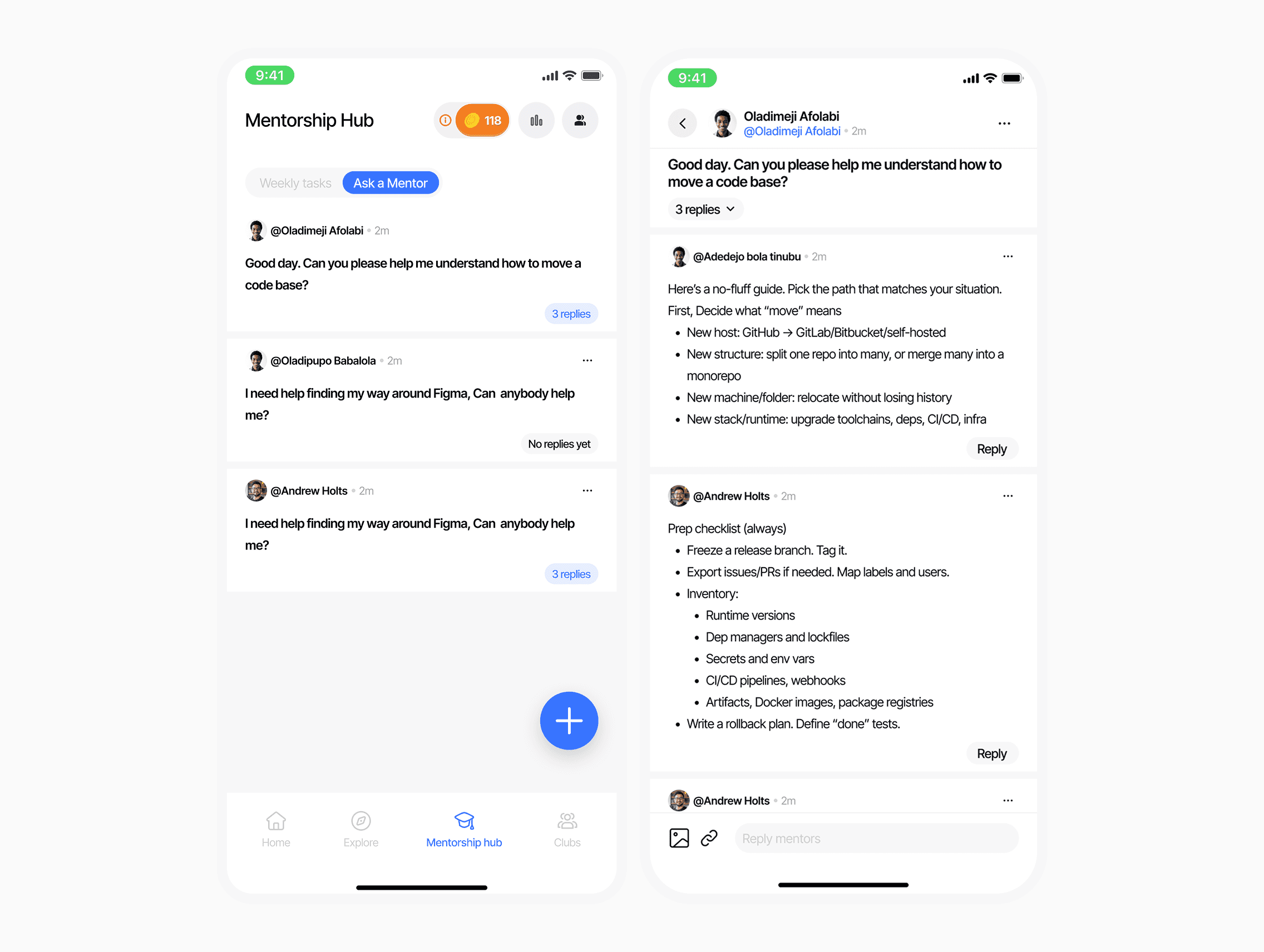
5. Mentor Q&A Threads
“Ask a Mentor” became a light but impactful feature. Users can submit questions and mentors answer in threaded form.
This supported the asynchronous nature of architecture practice. During pilot testing, 68 percent of all questions were answered within 24 hours.
Ask a Mentor threads
Leaderboard and badges implementation
The Impact
My design decisions and contributions to the creation of Hyve's MVP while working as a generalist and the lead designer led to significant results such as:
1. A platform that motivates consistent learning
Users stayed longer. In usability tests, participants reported:
“I know exactly what to do each week.”
“The structure helps me keep my energy up.”
The clear weekly flow reduced cognitive overload and increased platform stickiness.
2. Mentors spent less effort but delivered higher-quality feedback
The structured feedback design made workflows faster. Mentors called the system “surprisingly easy” because they didn’t need to repeat long explanations.
3. Stronger sense of community
Clubs created micro-identities. Engagement in discussion posts doubled during the second user testing round.
4. A portfolio space that aligns with the reality of design work
The curated cards gave users pride in presenting clean work. It also made the feed usable on older devices.
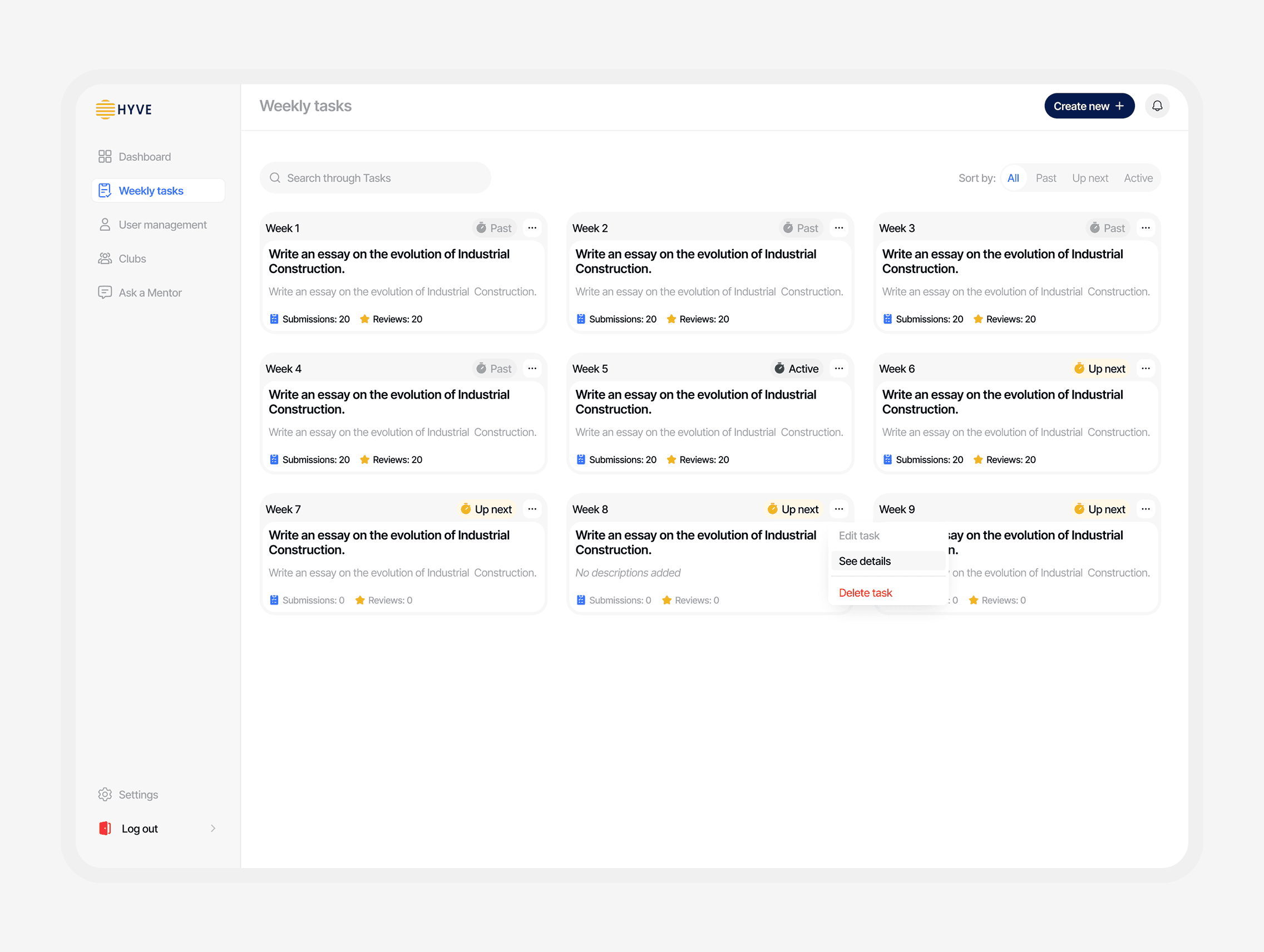
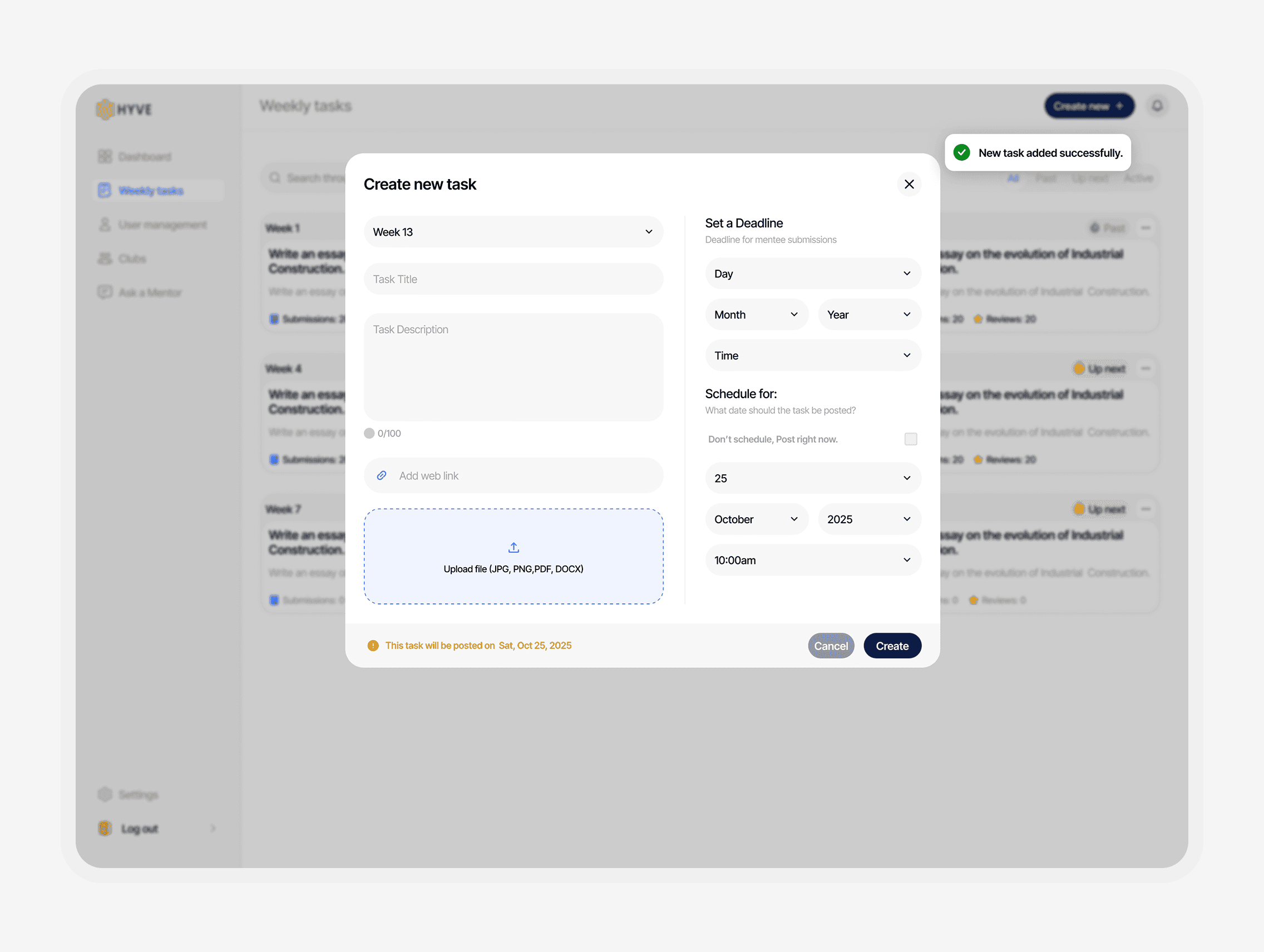
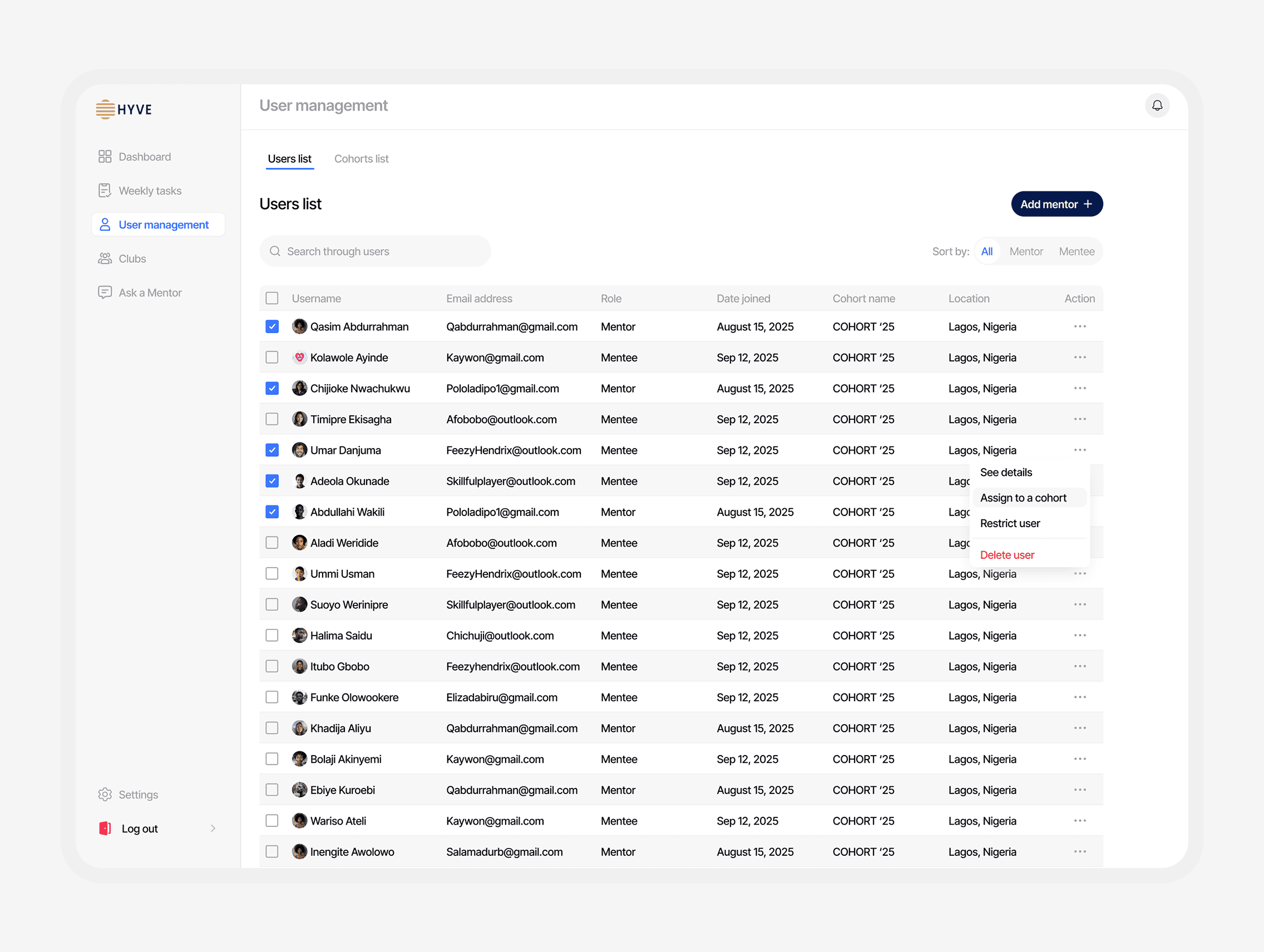
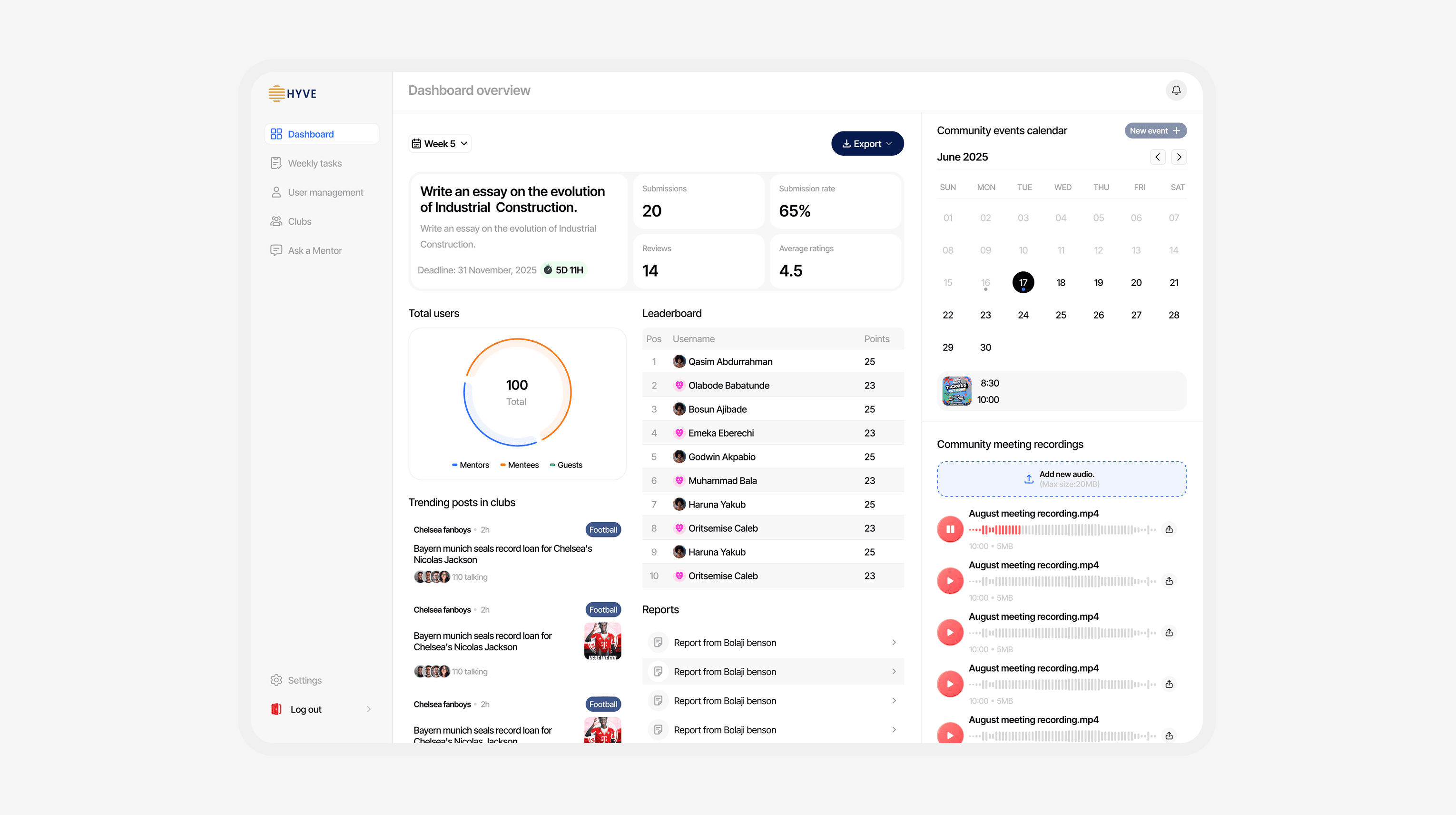
5. Scalable admin dashboard
The admin dashboard I designed allows FDC to:
Track submission patterns
Approve new mentors
Push weekly learning materials
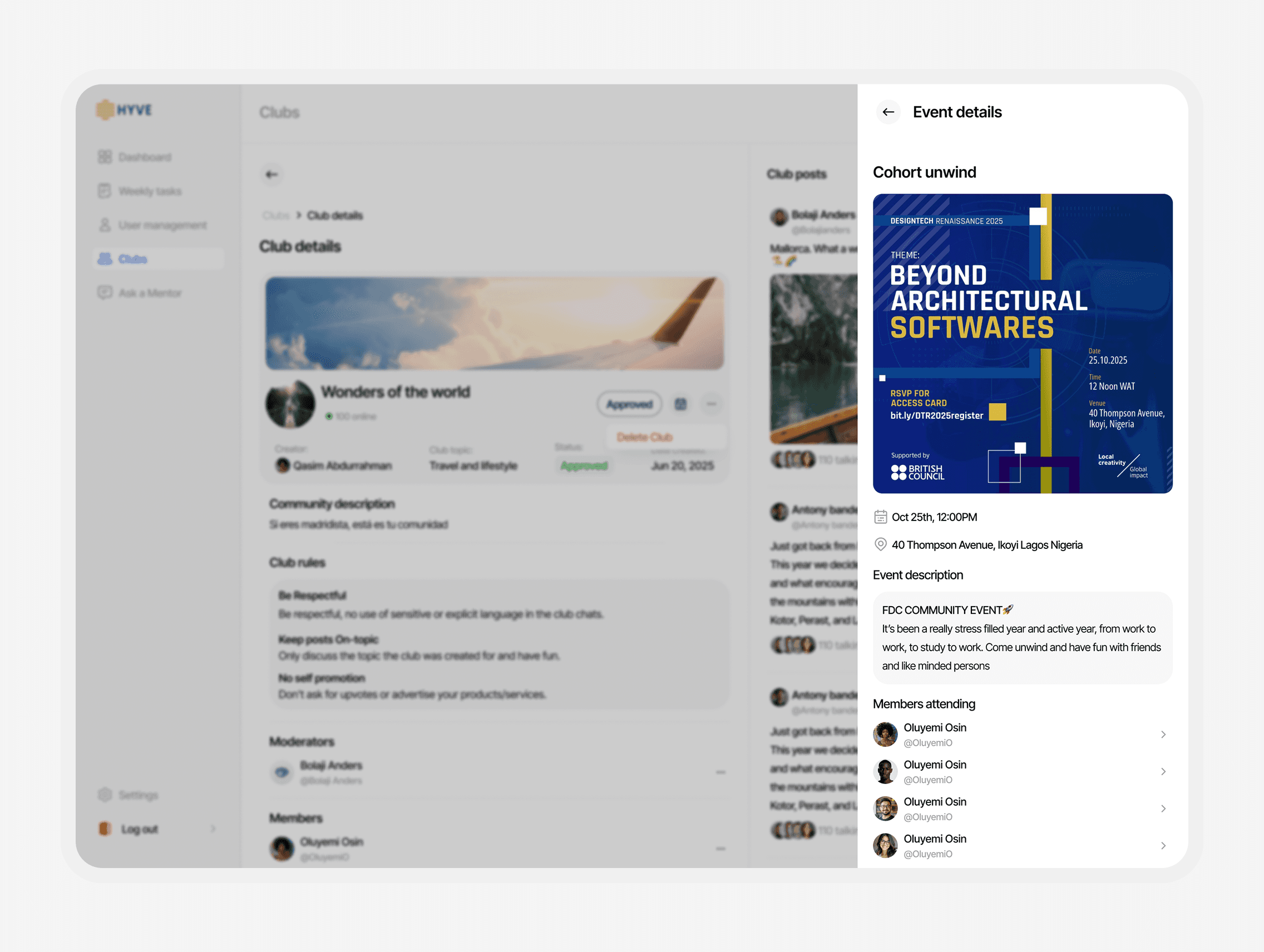
Manage club activity
Home overview of Admin dashboard